
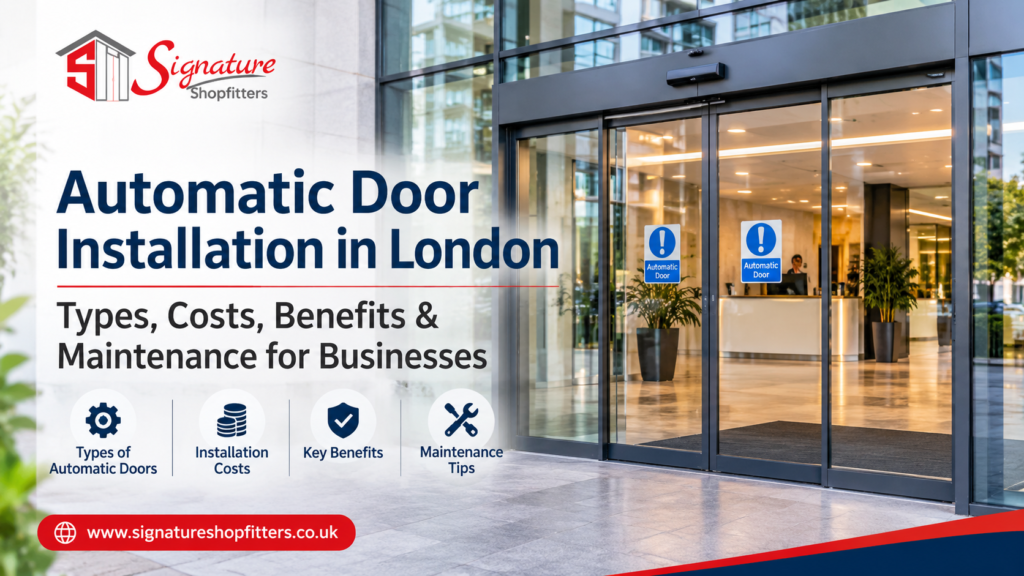
Choosing the right entrance for a commercial property is about more than appearance. It affects how customers enter your premises, how easily people move through the building and how safely your business operates every day. For shops, offices, restaurants and other commercial spaces, automatic doors can make a noticeable difference to the overall customer experience. With more businesses investing in convenient and accessible entrances, automatic door installation in London has become an important consideration for commercial property owners. Modern automatic doors offer smooth operation, improved accessibility, attractive designs and practical solutions for busy entrances.
However, before choosing a system, it is worth understanding the different types of automatic doors, their installation requirements, maintenance needs and overall costs.
In this guide, we explain everything London businesses should know before investing in a new automatic door system.
1. Why Are Automatic Doors a Good Choice for London Businesses?
London commercial properties experience different levels of daily footfall. Retail shops, shopping centres, offices and hospitality businesses often need entrances that can handle regular customer movement without creating unnecessary delays.
Automatic entrance doors for businesses in London offer several practical advantages.
Improved customer accessibility: Automatic doors allow customers to enter and leave without manually pushing or pulling a heavy door. They can make entrances easier to use for wheelchair users, older visitors, parents with pushchairs and people carrying shopping.
Better customer experience: A smooth, automatic entrance creates a welcoming first impression. Customers can enter your premises more comfortably, particularly during busy periods.
Modern business appearance: Glass and aluminium automatic doors can give a commercial property a cleaner, more contemporary appearance. They also allow natural light into the entrance area.
Convenient daily operation: Sensors detect movement and activate the opening mechanism, reducing the need for manual operation.
Space-efficient entrance design: Depending on the configuration, sliding doors can be particularly useful where traditional hinged doors would take up valuable entrance or floor space.
For businesses looking to improve their premises, automatic doors offer a combination of convenience, functionality and professional appearance.
2. Types of Automatic Doors Available for Commercial Properties
The right automatic door depends on your entrance dimensions, available space, customer traffic and the overall design of your building.
Here are some common options to consider when planning commercial automatic doors in London.
Automatic Sliding Doors
Automatic sliding doors are among the most popular choices for retail shops, supermarkets, shopping centres and commercial buildings.
These doors open horizontally along a track rather than swinging into the entrance area. Sensors detect approaching users and activate the opening mechanism.
Benefits include:
- Suitable for entrances with regular customer traffic.
- Convenient access for wheelchair users and pushchairs.
- Modern appearance with glass and aluminium framing options.
- No traditional swing clearance required.
If your business has a busy entrance, automatic sliding door installation in London can be a practical solution for managing customer movement.
Automatic Swing Doors
Automatic swing doors operate by opening inwards or outwards using a powered mechanism. They are particularly useful where a sliding door system may not be suitable.
They can be installed in offices, smaller retail premises, healthcare facilities and other commercial buildings.
Key advantages include:
- Suitable for many existing door openings.
- Can be adapted to different entrance layouts.
- Available in a range of designs and finishes.
- Can support convenient access when appropriately configured.
Professional automatic swing door installation in London should consider the available opening space, door weight, traffic direction and safety requirements.
Automatic Glass Doors for Shops
Glass automatic doors are a popular option for businesses that want an attractive and open-looking entrance.
They allow customers to see inside the premises before entering, helping create a more inviting retail environment. Toughened safety glass and suitable framing systems can also provide a durable commercial entrance.
Automatic glass doors for shops in London are particularly suitable for retail stores, showrooms, restaurants and modern commercial properties.
The final specification should consider glass thickness, framing, visibility markings, security and the requirements of the entrance.
3. How to Choose the Right Automatic Entrance Door
Not every automatic door system is suitable for every building. Selecting the right option requires a little planning.
Consider the following factors before making a decision.
Daily footfall: A busy retail entrance may need a different system from a small office entrance. Higher customer traffic can influence the choice of operator and door configuration.
Available space: Sliding doors generally require suitable side space for the door panels to move. Swing doors need enough clearance for their opening movement.
Building design: The door should complement the existing shopfront, glazing, aluminium frames and overall commercial appearance.
Accessibility: Consider how people with different mobility requirements will approach, enter and move through the entrance.
Security: Discuss suitable locking arrangements, access controls and security features for your business.
Maintenance requirements: Choose a system that can be inspected, serviced and repaired by appropriately qualified professionals.
A professional site assessment can help identify the most appropriate design rather than selecting a door based on appearance alone.
4. How Does Automatic Door Installation Work?
Understanding the installation process helps business owners prepare for the work and minimise disruption.
Although every project is different, automatic door installation usually involves several stages.
Step 1: Site inspection and measurements
The installer assesses the existing entrance, opening dimensions, surrounding structure and available electrical connections.
Step 2: Choosing the door system
Based on the property requirements, the appropriate sliding or swing door system, glazing, frame and operating mechanism are selected.
Step 3: Preparation of the entrance
The existing entrance may need adjustments to accommodate the new door system. Any structural or electrical requirements should be identified before installation begins.
Step 4: Installation and configuration
The door panels, tracks, motors, sensors and control equipment are fitted and configured according to the system specification.
Step 5: Safety testing and handover
The installer checks the opening and closing operation, sensor response, safety devices and relevant operating functions. The customer should also receive appropriate operating and maintenance information.
The installation timeline depends on the complexity of the project, manufacturing requirements and any additional building work. Signature Shopfitters advises that many of its installations take approximately two to three days after manufacture, although individual project timescales can vary.
5. Automatic Door Installation Cost UK: What Affects the Price?
One of the most common questions businesses ask is how much automatic doors cost to install.
There is no single price that applies to every commercial property. The automatic door installation cost in the UK depends on the design, specification and condition of the existing entrance.
The main cost factors include:
1. Type of automatic door: Sliding, swing and specialist entrance systems have different operating mechanisms and installation requirements.
2. Door dimensions: Larger openings may require bigger panels, stronger operating equipment and additional structural preparation.
3. Materials and glazing: Aluminium frames, glass specifications, finishes and customised designs can affect the overall price.
4. Automation equipment: Motors, sensors, control units, safety devices and access control options influence the final specification.
5. Installation complexity: Replacing an existing automatic door may be different from installing a completely new entrance where structural or electrical work is required.
6. Additional security features: Locking mechanisms, access control and other integrated features can add to the project cost.
For an accurate quotation, it is best to arrange a site survey. This allows the installer to understand your requirements and provide a price based on the actual entrance rather than a general estimate.
6. Automatic Door Safety and UK Compliance Requirements
Safety should always be a priority when installing automatic doors in a commercial building.
An automatic entrance is a powered system that interacts with employees, customers and members of the public. It must be designed, installed and maintained with the safety of its users in mind.
Businesses should discuss the relevant UK requirements with their installer, including:
- BS EN 16005, covering safety in use and test methods for powered pedestrian doorsets.
- Appropriate risk assessment and risk reduction.
- Correctly positioned safety sensors and protective devices.
- Suitable emergency operation and power-failure arrangements.
- Clear visibility and appropriate safety markings on glazed doors.
- Relevant accessibility and building requirements.
The latest applicable standards and guidance should be checked for each project. Compliance is not simply about fitting a particular type of sensor; the complete entrance system needs to be assessed for its intended use.
Property owners and occupiers should also keep appropriate maintenance records and ensure faults affecting safe operation are dealt with promptly.
7. Automatic Door Maintenance London: Why Regular Servicing Matters
Like any powered equipment, automatic doors require ongoing attention to maintain reliable operation.
Regular automatic door maintenance in London can help identify minor issues before they develop into expensive breakdowns.
A professional maintenance visit may include checking:
- Door opening and closing movements.
- Motion sensors and safety devices.
- Motors, controls and electrical connections.
- Tracks, rollers and moving components.
- Locking systems and emergency functions.
- General door condition and operating performance.
The frequency of servicing should follow the manufacturer’s instructions and take account of how frequently the doors are used.
Businesses should also arrange regular professional inspections and maintain appropriate records. Routine cleaning around the tracks and entrance area can help prevent dirt and debris from affecting door movement.
Importantly, staff should know how to report unusual noises, delayed operation or sensor problems.
8. Automatic Door Repair London: Signs Your System Needs Attention
A faulty automatic door can inconvenience customers and potentially create a safety concern.
If your entrance is not operating as expected, arrange an assessment rather than repeatedly attempting to operate or adjust the equipment yourself.
Common warning signs include:
- Doors opening or closing more slowly than usual.
- Sensors failing to detect approaching people.
- Doors making unusual noises during operation.
- Panels getting stuck or moving unevenly.
- Doors failing to close or remain open unexpectedly.
- Intermittent operation or control system faults.
Professional automatic door repair in London can help identify the underlying problem and determine whether a component needs adjustment, repair or replacement.
If a fault affects safe operation, the equipment should be taken out of service and the entrance made safe until it has been assessed by a competent professional.
9. Automatic Doors for Offices, Retail Shops and Commercial Buildings
Different businesses have different entrance requirements.
Retail shops: Automatic glass doors can create a welcoming entrance, improve customer access and complement modern shopfront designs.
Offices: Automatic doors for offices in London can provide convenient access for employees and visitors. They can also be integrated with suitable access control systems.
Restaurants and cafés: An automatic entrance can help customers enter comfortably, particularly during busy service periods.
Healthcare premises: Accessibility is especially important in environments used by patients, visitors and people with limited mobility.
Showrooms and commercial buildings: A modern automatic entrance can improve the overall appearance of the property while supporting regular visitor movement.
The best solution depends on the building layout, number of users, safety considerations and the purpose of the entrance.
10. Why Choose Signature Shopfitters for Automatic Doors in London?
Choosing the right installer is just as important as choosing the right door system.
Signature Shopfitters provides automatic door shopfront solutions for commercial properties across London, including areas such as Romford, Ilford, East London and surrounding locations.
The company offers sliding and swing door options, customised designs and entrance solutions intended to complement different business requirements.
Whether you are planning a new retail entrance, upgrading an existing shopfront or considering automatic doors for your office, it is important to receive advice based on the actual property and intended usage.
Signature Shopfitters Ltd can help discuss your requirements, assess your entrance and provide a quotation for your project.
Final Thoughts
Automatic doors are a practical investment for businesses that want to improve accessibility, customer convenience and the appearance of their commercial premises.
From automatic sliding door installation to customised swing and glass entrance systems, the right choice depends on your building, daily footfall and operational requirements.
Before choosing a system, consider installation costs, safety, maintenance and long-term reliability. Working with an experienced installer can help you make a more informed decision and achieve an entrance that suits your business.
If you are planning automatic door installation in London, contact Signature Shopfitters to discuss your requirements and arrange a site assessment for your commercial property.
Frequently Asked Questions (FAQs)
How much does automatic door installation cost in London?
The cost depends on the type of door, entrance dimensions, materials, automation equipment and installation complexity. Sliding and swing systems may have different costs. A site survey is the best way to receive an accurate quotation for your commercial property.
Which automatic doors are best for commercial buildings?
Automatic sliding doors are often suitable for busy retail entrances and commercial buildings with regular footfall. Swing doors can be a practical option for offices and entrances where sliding systems are unsuitable. The right choice depends on available space, traffic and safety requirements.
How long does automatic door installation take?
The installation time varies depending on the door design, manufacturing, entrance preparation and electrical requirements. Some straightforward commercial installations can take a few days, while larger or more complex projects may take longer.
Are automatic sliding doors suitable for small shops?
Yes, automatic sliding doors can work well in small shops if there is enough space beside the entrance for the panels to move. A site assessment can establish whether a sliding system or another door configuration is more suitable.
Do automatic doors need regular maintenance?
Yes. Automatic doors contain motors, sensors, controls and moving components that need regular inspection and maintenance. Servicing should follow the manufacturer’s recommendations and reflect the frequency of use.
Can automatic glass doors be installed in existing shopfronts?
In many cases, automatic glass doors can be incorporated into an existing shopfront. However, the entrance structure, available space, glazing, electrical supply and safety requirements need to be assessed before installation.
Are automatic doors suitable for offices in London?
Yes. Automatic doors can provide convenient access to offices, reception areas and commercial buildings. Sliding and swing systems can both be considered depending on the building layout, visitor traffic and access control requirements.
What should I do if my automatic door stops working?
Stop using the door if its operation may be unsafe and arrange an inspection by a competent automatic door technician. Avoid forcing the panels or attempting electrical repairs yourself. The technician can identify whether the problem involves sensors, motors, controls or mechanical components.
Do automatic doors need to comply with UK safety standards?
Yes. Commercial automatic pedestrian doors must meet the applicable machinery safety and workplace requirements. BS EN 16005 provides important guidance on the safe use of powered pedestrian doorsets. The installation should also be appropriately risk-assessed.
Does Signature Shopfitters install automatic doors across London?
Signature Shopfitters provides automatic door shopfront solutions across London, including Romford, Ilford, East London and surrounding areas. Businesses can contact the company to discuss their entrance requirements, request a site assessment and obtain a project-specific quotation.