
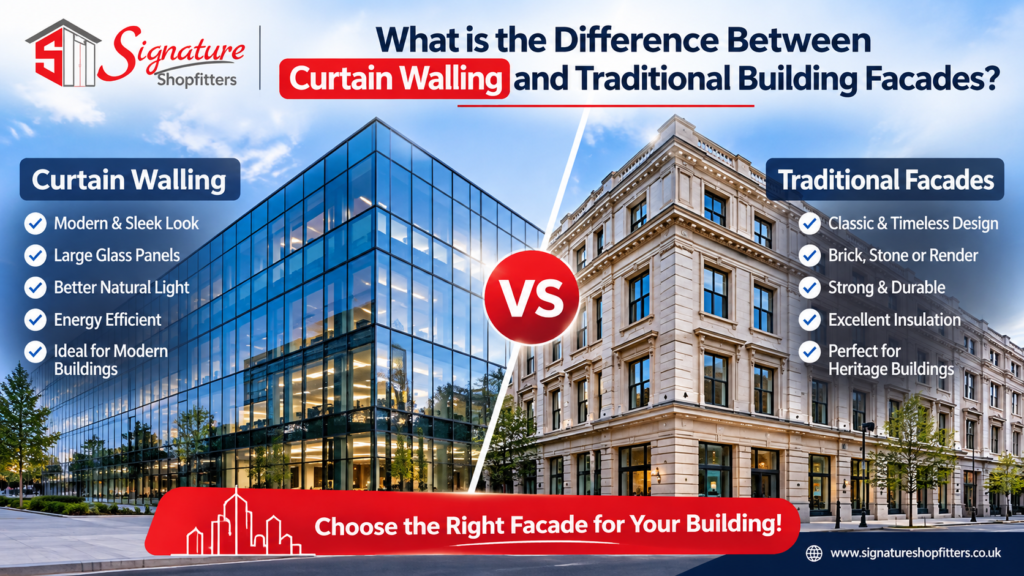
Building exterior is important as it affects the looks of the building, its performance and its future value. In commercial construction works, the facade is not a mere layer as it does protect the building against weather, adds to the energy savings, and the architectural design. Curtain walling and traditional facades are two of the most widespread exterior building systems nowadays. These two elements both act as the exterior coating of the building; however, they vary on the structures, materials, the way of installing them, and as well as the performance.
The decision between a curtain walling and traditional facades may affect the aesthetics of a building, its maintenance needs, energy efficiency and construction expenses. In this guide, the primary differences between these systems will be discussed to enable property owners, developers, architects and contractors to make informed decisions.
What Is Curtain Walling in Construction?
Curtain walling- it is a non-bearing facade fitting that is fastened to the structural framework of the structure. Curtain walling, as opposed to the traditional walls, does not allow the building to be supported by the wall itself. Rather, it is an outer protective coating against wind, rain and other elements in the environment.
Current curtain wall facade designs are usually constructed with aluminium frames and huge glass panels that have a smooth and modern outlook. The systems are popular in commercial buildings, office developments, shops, hotels and education centres where natural light and modern flight are of significance.
Key Features of Curtain Walling
- Compared to conventional masonry walls, lightweight construction.
- Vinyl aluminium curtain walling systems.
- Glazing and a high number of glazed windows maximising daylight.
- Better visibility and contemporary building structure.
- Protected against adverse weather and energy-saving.
- Adaptability of commercial projects designs.
Curtain walling is now a favorite in contemporary commercial projects around the UK due to its ability to be pre-fabricated in-house and easily assembled.
Also Read : Emergency Shopfront Repair Services
What Are Traditional Building Facades?
Traditional building facades refer to exterior walls that are built with the use of a brick, stone, concrete, or masonry material. These facade systems, on most occasions, help the building to have a structural integrity and also assist in supporting the entire structure of the building.
Conventional facades have been centuries old and applied in residential, commercial and communal dwellings because of their enduring life and classic look. They are frequently used in those projects, when a more traditional type of architecture is desired or when the buildings are supposed to be unified with nature.
Common Types of Traditional Facades
- Brick Facades: Brick has been one of the most popular facade materials as it is strong, durable and requires minimal maintenance cost.
- Stone Facades: Natural stone is a high-end look and performance and thus can be used in high-end business structures.
- Concrete Facades: Concrete is strong and flexible, especially when it comes to large-scale construction.
- Masonry Wall Systems: Masonry is an outer wall layer that unites blocks made of bricks, stones or blocks to form robust yet durable exterior walls, which can be used to contribute to the structure of the building.
Conventional facades are still employed in most industries especially in cases where heritage outlook or structural functionality is a factor.
Curtain Walling vs Traditional Facades: Key Differences
Both curtain walling and traditional facades are the external layer of a building which shields it against weather and environmental factors. Nevertheless, they have significant differences regarding structure, materials, design opportunities, natural light and installation techniques.
The knowledge of these differences will contain property owners, developers and architects with the most appropriate facade system to use in their project.
Structural Function
- Curtain Walling: Curtain wall is a non-loading system. It is not burdened with floors and roofs. Rather, it passes the environmental loads including the wind pressure to the structural frame of a structure.
- Traditional Facades: Traditional facades are not necessarily lightweight and can aid in the structure of the building. The building load-bearing system could include materials like the brick and concrete.
Materials Used
Curtain Walling
The systems normally used in curtain walls are:
- Glass panels
- Aluminium frames
- Where necessary, reinforcement with steel.
- These materials form a modern and lightweight exterior.
Traditional Facades
Conventional facade systems usually employ:
- Brick
- Stone
- Concrete
- Masonry materials
These are materials that provide strength and durability, however, being typically heavier than a curtain wall system.
Design Flexibility
- Curtain Walling: Curtain walling provides a wide scope of design. Due to architectures, large glazed surfaces, unique shapes and modern building designs in form can be achieved at the expense of structural performance.
- Traditional Facades: Traditional facades may be less flexible in design ability, because of the construction method employed with masons. They could lack the same amount of transparency or glazing features, but they have a much prettier appeal.
Natural Light
- Maximal Natural Daylight: One of the largest benefits of curtain walling is that it allows the maximum amount of natural daylight. Big castle windows will enable the sunlight to enter deep into the interior areas making them brighter and more comfortable.
- Traditional Facades: Traditional facades typically feature a smaller number of window openings, which means they do not provide much daylight as compared to curtain wall systems.
Installation Process
- Curtain Walling: A range of curtain wall systems are manufactured off-site, which are prefabricated then assembled on-site. This can assist in minimising building time and better project effectiveness.
- Traditional Facades: Traditional masonry builds tend to need more construction work on site and may be more time consuming to build since it involves laying down separate units, including bricks or stone.
Curtain Walling vs Brick Facade: Which Performs Better?
In the curtain walling vs brick facade system, there is no one-fit solution to every project. The two would be equally durable and protective but they have considerable differences in their performance type, appearance, maintenance and appropriateness to current commercial developments.
The use of brick facades dates back to decades of its power and traditional outlook. Nonetheless, a significant number of developers and building owners are now resorting to curtain walling as they are more flexible, offer more natural light, and better energy consumption to modern buildings.
Thermal Performance
The contemporary curtain walling is also capable of a powerful glazing system and thermal break which enhances the insulation and minimizes energy wastage. Thermal mass is also offered by brick facades but this may need to be supplemented by other insulation systems to meet the same level of energy performance.
Weather Resistance
The design of the curtain walling is specifically designed to withstand wind, rain and moisture penetration. Correctly fitted systems are effective in offering a lot of weather protection. The brick facades are hardy, and they might need regular maintenance to resolve the problem of mortar contravention and infiltration of water.
Maintenance Requirements
To ensure the appearance and performance of the wall, regular cleaning and inspection of curtain walling is usually necessary. Brick facades might require some repointing, repairing, or cleaning with time, especially old buildings.
Appearance
Curtain walling forms a current and corporate feeling that is appealable by commercial property owners and developers. The facade designs with brick give a more classical and ancient appearance that is befitting some architecture.
| Feature | Curtain Walling | Brick Facade |
| Natural Light | High | Limited |
| Weight | Lightweight | Heavy |
| Installation | Faster | Slower |
| Modern Appearance | Excellent | Traditional |
| Maintenance | Lower | Moderate |
Curtain Walling Benefits for Commercial Buildings
Curtain walling has gained popularity as a facade solution in different industries as the commercial buildings remain to focus on energy efficiency, a modern look and long-term operation. In the case of office developments and retail units and even where hotels and school establishments are concerned, curtain walling has a number of benefits that can be used to facilitate functionality as well as aesthetics.
Improved Energy Efficiency
The glazing technology currently in use can be used to minimize heat transfer, which enhances the overall building performance. This can help in reducing the cost of heating and cooling all year round.
Enhanced Visual Appeal
Glass and aluminium curtain walling systems are preferred because the curtain walling system has a clean, professional, and modern look that will add value to a company in terms of brand image and value of properties.
Better Natural Light
There is abundant glaze on the facade resulting in increased daylight in the building which makes workspaces brighter and more comfortable to the occupants.
Flexible Design Options
Curtain walling may be tailored to meet the needs of a variety of commercial applications, such as:
- Office buildings
- Retail stores
- Shopping centres
- Hotels
- Mixed-use developments
- Educational facilities
This flexibility has contributed to the widespread use of this solution in facades in contemporary construction.
Why Modern Office Buildings Use Curtain Walling Systems
Curtain walling is being applied in many of the modern office developments due to its combination of aesthetics, functionality, and efficiency.
Fabricated large glazed facades will provide a corporate image of a large scale but still allow natural light to penetrate the workspace. By illuminating the inside of buildings, the areas can be more comfortable and visitor-friendly to clients and employees.
Curtain walling also aids in energy-consciousness in building design and may help drive toward sustainability by enhancing thermal performance and use of daylight.
Common Applications
- Office buildings
- Corporate headquarters
- Retail centres
- Hotels
- Educational institutions
- Healthcare facilities
Modern Building Facade Solutions: Why Curtain Walling Is Growing in Popularity
Modern building facade solutions are on demand due to the current demand where developers want systems that give a performance, sustainability, and aesthetic appearance.
Curtain walling systems are growing due to a number of reasons:
- Greater emphasis on energy efficiency
- The development of glazing technology.
- Higher requirements of sustainable construction.
- Contemporary architectural trends
- The enhanced production and set up procedures.
- Expansion of commercial and mixed-use in developments.
Aluminium curtain walling systems specifically have become a favourable option because of the durability, strength and low maintenance needs.
Also Read : curtain wall repair in London
Factors to Consider When Choosing Between Curtain Walling and Traditional Facades
When deciding on curtain walling versus traditional building facades there are some serious questions to consider on the goals of your project, budget and performance needs. Both systems may offer durability and weather protection but the appropriate one varies and is based on the intended use of the building and the resultant architectural appearance.
Building Purpose
The facade will depend on the purpose of the building. Curtain walling is usually favored in an office, retail and store development, and in certain cases a building could be aesthetic and prefer to use traditional materials.
Budget Requirements
Early construction and maintenance costs (long term) must also be taken into consideration when comparing facade options.
Design Goals
Although curtain walling is popular with projects that want a modern look, traditional facades could be more appropriate in the heritage or classic building architectural designs.
Energy Efficiency Needs
The decision between using curtain walling and conventional facade can be affected by building regulations, sustainability goals, and energy performance goals.
Curtain Wall Installation UK: Choosing the Right Contractor
Effective curtain wall system performance is largely reliant on effective design and installation. Having a contractor of experience will assist in making the system fit safety requirements, building codes, and project requirements.
In choosing a curtain walling specialist, you should consider:
- Knowledge of commercial curtain walling solutions.
- Understanding of building regulations in the UK.
- Quality of materials and workmanship
- Design and project management skills.
- Continuing services of maintenance and support.
- Past experience of similar projects.
We, Signature Shopfitters offer professional curtain walling installation services based on the requirements of the commercial properties throughout the UK. We have been able to incorporate industry skills, superior materials, and craftsmanship to provide curtain walling systems that provide improved appearance to a building, maximise natural lighting, and long-term performance.
Conclusion
Curtain walling and the conventional building facades are two building solutions that offer effective exterior building solutions but differ greatly in their structure, materials, appearance and performance.
Conventional fronts are stable and boast of traditional style of architecture where curtain walling is associated with modernity, enhanced natural light, flexibility of construction design and high energy efficiency value. This has led to the use of curtain walling in most commercial buildings, office developments, retail buildings and modern constructions.
The right facade system is finally dependent on the purpose of the building, budget, design objectives and the performance requirements. Knowing how these systems vary, property owners and developers will be able to make informed choices that maintain the short-term goals of a project, as well as the long-term performance of a building.
Frequently Asked Questions (FAQs)
What is the difference between curtain walling and traditional facades?
The key distinction is that curtain walling is a non-load-bearing facade system that is connected to a structural frame of a building, and traditional facades are frequently constructed out of brick, stone or concrete and provide structural support to a building. curtain walling A standard design of the curtain walling should be able to offer natural light, protection against weather and the look of a sophisticated building without supporting the weight of the building.
Does a curtain walling outdo a brick facade in commercial buildings?
Both curtain walling and brick facades have their benefits and the most appropriate one is determined by the objectives of the project. Modern commercial developments are commonly being curtained walled due to their ability to gain more design flexibility, better natural lighting, and a modern look. Brick facades are appreciated due to their reliability, traditionalism, and performance, which has been proven over the years.
What are the advantages of curtain walling on office buildings?
Curtain walling assists in achieving bright and friendly office interiors as it enables the entry of a lot of natural light into the building. It also complements modern architecture design, enhances energy efficiency with the incorporation of high-performance glazing, and it also improves the overall look of the office advancements.
Are aluminium curtain walling systems energy efficient?
Yes, aluminium curtain walling systems of the day can be very efficient in energy usage. They are also manufactured with thermal breaks and advanced glazing technology which assists in reducing heat transfer, enhancing insulation and the use of less energy in heating and cooling down.
Does curtain walling load-bear?
No, curtain walling is not a load bearing system. It serves as a structural exterior to the structural frame of the building and is made to withstand the elements like wind and rain. Weight of the floors, roof and other structural portions is borne by the structural framework bearing the building.
What is the duration of installation of curtain walls in the UK?
Installation time will vary according to the size, complexity of the design, and the scope of the project. Since a system of curtain walls is constructed to order, a large number of the systems are premade off-site and therefore installation can be done much more quickly than standard masonry. Large business projects might be undertaken over a couple of weeks, whereas simpler ones can be accomplished within a couple of days.
Which buildings utilise a curtain walling system?
Curtain walling systems are frequently found in office facilities, retail facilities, shopping malls, hotels, medical facilities, schools and colleges and in mixed use developments. They usually give these buildings a contemporary feel, natural light and the way the system consumes energy.
Can curtain walling be used in retail and shop front projects?
Yes, curtain walling is common in retail and shopping front buildings and developments. Big openings in glazes enhance the visibility of their products, make appealing fronts in the stores, and also allow more natural light to enter the store. This will assist in building a welcoming atmosphere to the customers as well as beautifying the entire property.
What are the maintenance needed in curtain walling?
In general, a curtain walling is to be washed, checked on a regular basis and seal, glazing elements, and drain systems maintained. Periodic repair of the system allows it to maintain its image, resistance to weather, and long-term operation, avoiding the possible occurrence of problems.
So, why is curtain walling getting more commonly used in modern commercial buildings?
There is an increasing use of curtain walling due to the fact that it offers a blend of a contemporary appearance, energy conservation and adaptability of design. Curtain wall systems are increasingly preferred by developers and architects to develop aesthetics of buildings maximising natural lighting to work towards sustainability and meet the needs of modern commercial architecture.